

Pininfarina Cambiano – “Beauty always leaves an indelible ma...
16/05/2025 | Admin
All Categories

We probably don't need to convince anyone of the beauty of Italian cities - it's a fact we all agree on. And perhaps it was best described by the famous American writer Mark Twain, who said that "the Creator created Italy after the designs of Michelangelo". Here, Twain was referring to the brilliant Renaissance artist, meaning the unfathomable perfection of his works. We will borrow a lyrical expression for the above-mentioned praise of Italian beauty from the most important Russian poet Anna Akhmatova, who experienced Italy as "a dream that returns to you for the rest of your life".
Pininfarina Segno's exclusive collection of pens, Piuma Italian Beauty, is meticulously designed to celebrate the art, culture, and elegance of Italy. This special edition, dedicated to some of Italy's most beloved cities, such as Rome, Milan, and Florence, was created in partnership with renowned Italian illustrator Francesco Corni (1952-2020) and the foundation associated with his artistic legacy.
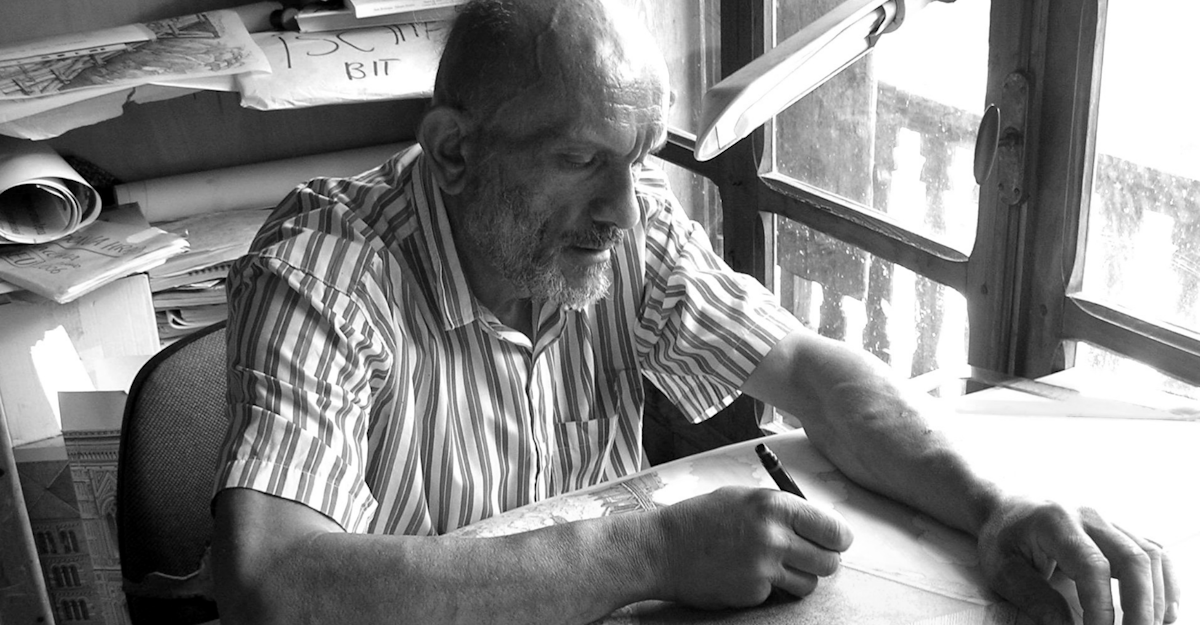
Francesco Corni
These are pens whose bodies are entirely made of pear wood, with a silhouette reminiscent of goose feathers used for writing. The refill is Schmidt S635 D1 to ensure easy and precise writing. The pen comes with a steel desk holder, and one of its most striking features is the box, with which Pininfarina builds on the vision of Francesco Corni (whom we'll discuss shortly) with a clever choice of colors, one for each of the cities represented in the collection, creating a new work of art from the Piuma box.
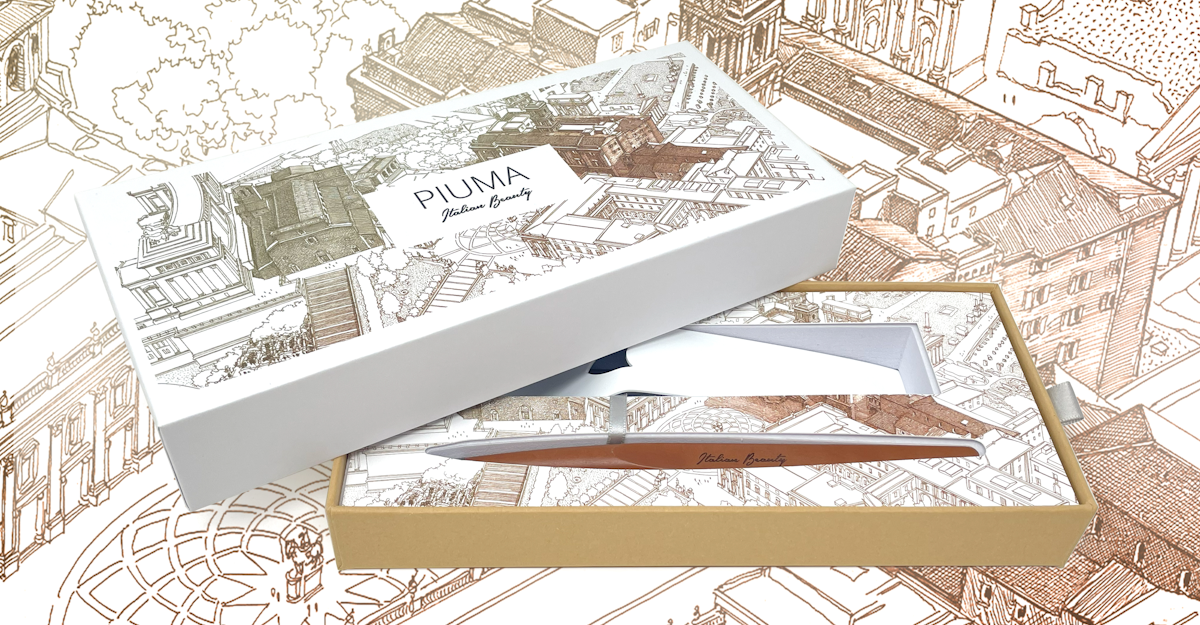
Piuma ITALIAN BEAUTY (Rome)
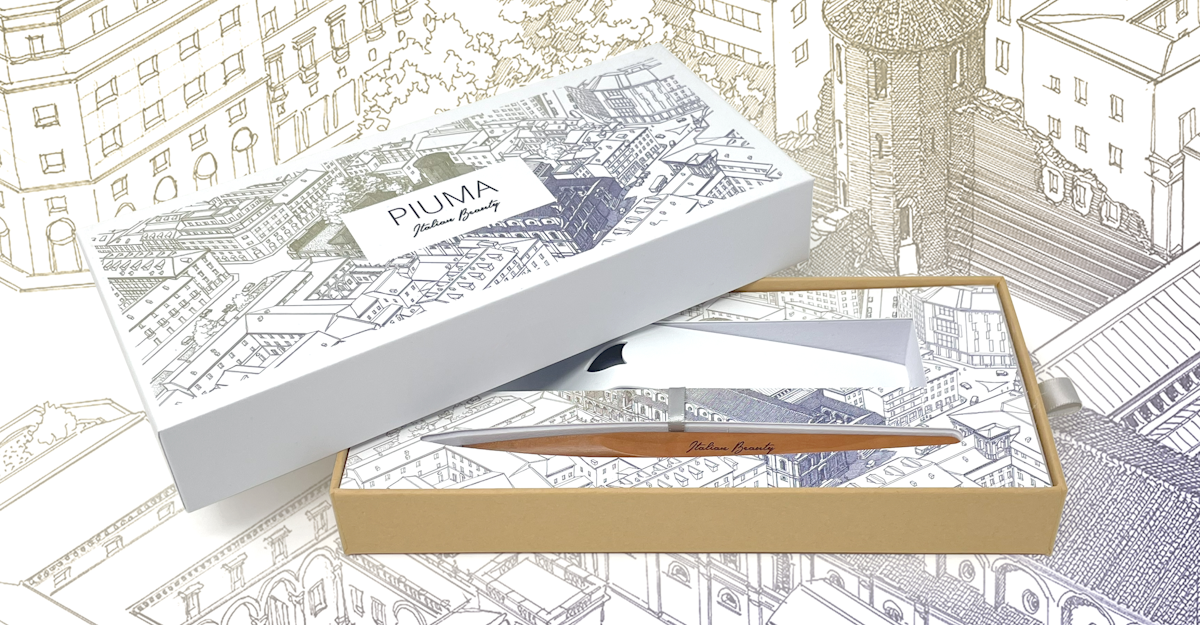
Piuma ITALIAN BEAUTY (Milan)
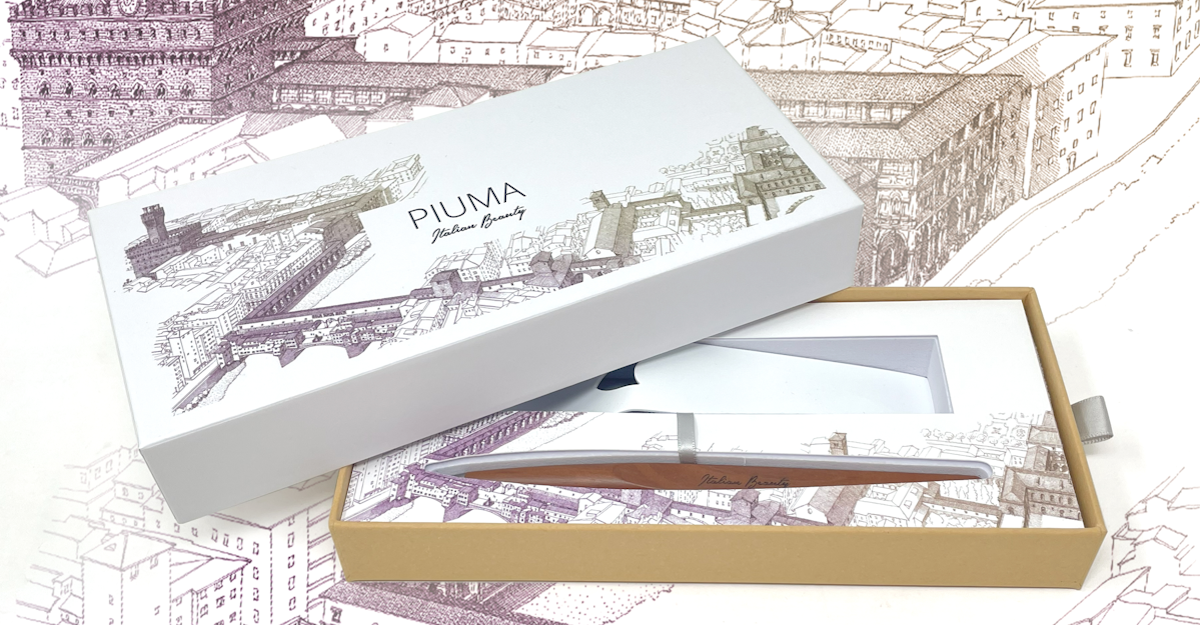
Piuma ITALIAN BEAUTY (Florence)
Francesco Corni is an illustrator who has dedicated his life to the promotion of history and architecture. Born in Modena and raised in Turin, he acquired his professional training for the aforementioned purpose as an official draughtsman during archaeological excavations. Drawing the discoveries of archaeologists, Corni soon realized that his drawings were very effective in bringing abstract scientific concepts to the public, especially at a time when 3D reconstructions did not yet exist. He soon began collaborating with professional journals, developing his own artistic language capable of engaging a wide audience. His illustrations amaze with their precision and detail, as well as the perspectives in which the objects are depicted. It is this approach that has allowed audiences to more easily understand complex architectural and historical structures.
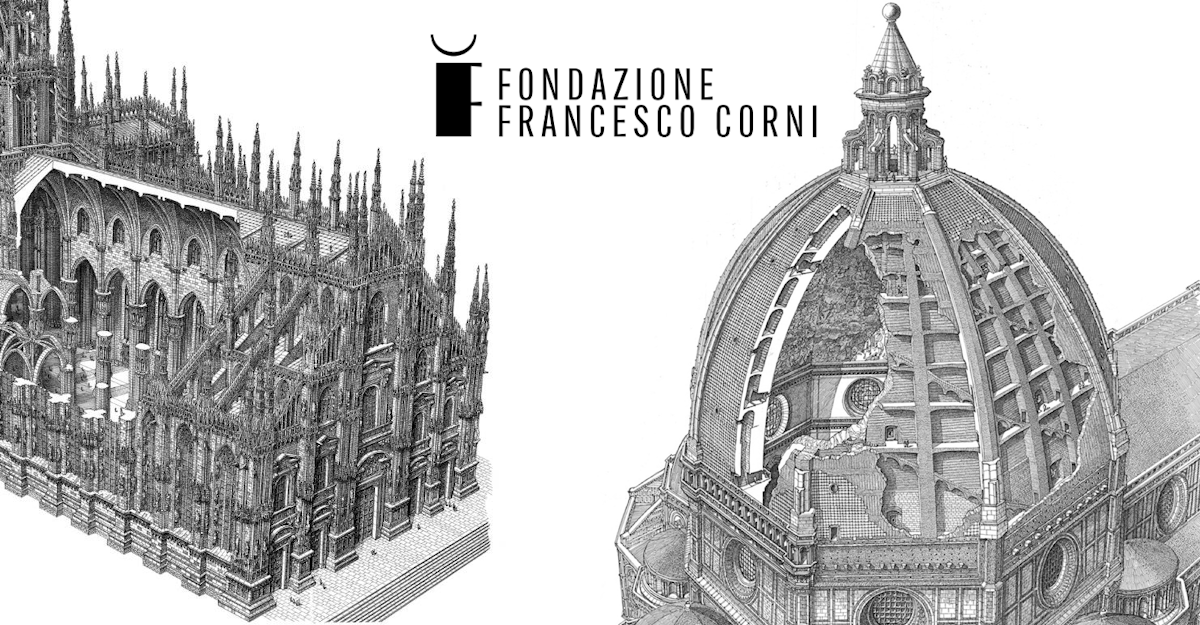
Illustrations by Francesco Corni
During this period Francesco Corni began collaborating with numerous Italian and European publishers, museums, and other institutions, creating illustrations for books, documentaries, educational panels, and organizing exhibitions. His work is increasingly focused on making historical, archaeological, and architectural data accessible and interesting to all, believing that it is the understanding and admiration (of the beauties of Italy with which the artist is concerned) that is a prerequisite for the preservation of cultural heritage. As we have said, the precision and the detail of his drawings were a call to the observer: there is something here that deserves attention. And to the same narrative, we added his other most important characteristic, namely the perspective in which he placed the objects, which he achieved in the following way: first, he studied the object in question extensively, then he "dissected" it, that is, "disassembled" it, before finally depicting it in a three-dimensional, often "flying" perspective, striving to convey as much information as possible on paper.


